Quiet Break or Change of Scene?
A quiet break or change of scene can offer different kinds of rest. Choose the one that fits your moment and return with less friction.

The common mistake with a quiet break or change of scene is choosing by habit: staying put because it is easiest, or leaving because a break is supposed to involve movement. The cost is a pause that does not meet the need you actually have. Decide first what feels crowded—your attention, your surroundings, or both—then choose the smallest shift that gives you room.
Notice what feels stuck
Before you get up or settle in, take a moment to name what you want from the pause. You do not need to analyse your mood. Try a plain description: “I keep rereading the same line,” “the room feels noisy,” or “I need a minute without conversation.” A useful choice usually becomes clearer once the problem has a name.
A quiet break keeps you in the same place and reduces what you are doing there. You might lean back, look away from a screen, lower your hands into your lap, or sit without trying to solve the next task. It offers continuity: your desk, book, or kitchen remains where you left it, while your attention gets a little less input.
A change of scene moves you away from the setting that is holding your attention. That might mean stepping into a hallway, sitting by a window in another room, or going outside for a short pause. The new surroundings can make it easier to stop responding to the sights and prompts associated with the task.
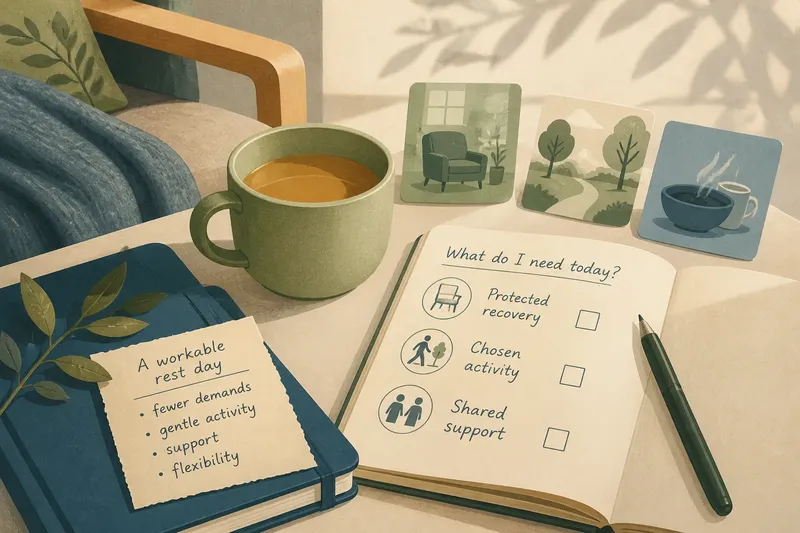
Think of the difference as changing the volume on a radio versus moving to another room. A quiet break turns down the activity where you are; a change of scene alters what surrounds you. Neither is the more virtuous choice. The helpful one is the one that addresses the source of the strain without making the pause into another job.
Choose the kind of reset
Stay in place when moving away would add friction or when you mainly need less input. If you are waiting for a call, working in a shared space, or simply too tired to organise a transition, a quiet pause may be the gentler option. It can also suit moments when your surroundings are fine but your attention has become tangled.
Step away when the immediate setting keeps pulling you back into the same loop. A screen full of unfinished work, a busy kitchen, or a room where people are asking for your attention may be difficult to tune out from within. A different spot gives your eyes and ears something else to meet, even if you go only as far as the doorway.
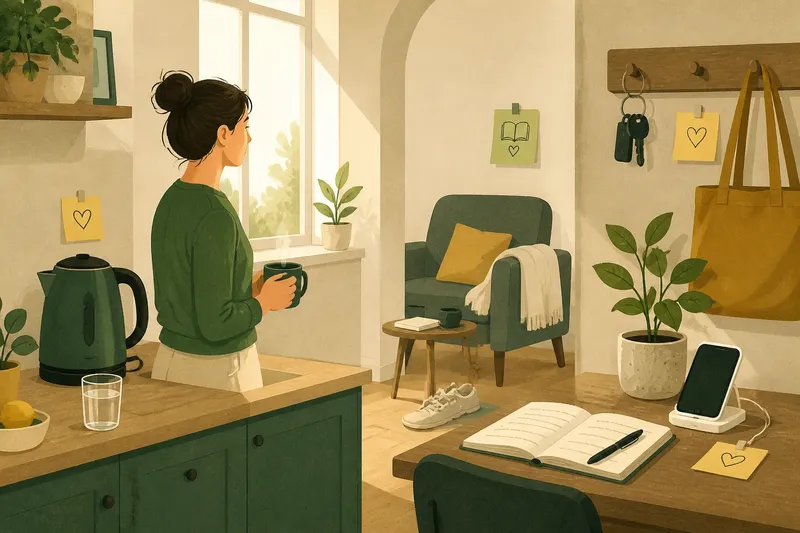
Say you are writing at a kitchen table and keep glancing at dishes waiting nearby. If the work itself is tiring, you could stay seated, turn your screen away, and let your hands rest for a brief pause. If the dishes and work are competing for your attention, you might take your mug to the garden step and sit there instead. The first choice reduces activity in place; the second removes you from the visual reminder. In either case, the expected sign that the pause helped is not a sudden burst of energy, but a little more room to decide what to do next.
Let practical needs shape the choice too. If you are in a public place, keep your belongings and personal comfort in mind before wandering off. If you are at home with someone who may need you, choose a spot where you can still respond appropriately. A pause should fit the situation rather than create a new worry.
Set up a quiet break
Make the pause small enough to begin without preparation. Put down the pen or rest your hands beside the keyboard. Turn your gaze towards a plain part of the room, close an open notebook, or let your shoulders settle without forcing them into a particular position. If sound is distracting, reduce it only if doing so is comfortable and appropriate where you are.
Leave the next task alone for the moment. Checking messages, making a fresh list, or deciding how to improve your routine can quietly turn rest into more work. You are not required to empty your mind or breathe in a special pattern. The point is simply to stop adding input for a little while.
When you are ready to return, choose one clear next action rather than reopening every unfinished concern at once. For example, put the cursor at the paragraph you were editing, or pick up the one ingredient needed for the meal. This gives the pause an easy edge: you can stop, rest, and resume without having to reconstruct your whole plan.
Make a change of scene
Choose a nearby destination before you leave, so you do not spend the pause deciding where to go. A chair near a window, a quiet landing, or a sheltered outdoor spot may be enough. If leaving the building is inconvenient, changing rooms can still alter the immediate surroundings.
Carry only what you need to feel comfortable and safe. You may take a cup of water or a warm layer if the place calls for one, but there is no need to turn the break into an errand. Once you arrive, give yourself permission not to use the new setting productively. Sitting in a different chair does not have to become reading, tidying, or catching up on messages.
Return when you feel ready to make a simple choice about what comes next, not because you have to prove the pause was useful. If you cannot leave for long, a brief visit to the doorway or window can still interrupt the view of the task. If the new spot is uncomfortable or busy, go back or choose another place; a change of scene is an option, not a test of endurance.
Quiet break or change of scene?
Which pause suits screen fatigue?
If the screen itself is tiring your eyes or attention, look away from it and consider moving somewhere without another display in view. If you feel generally overloaded but your setting is calm, staying seated and closing the work can be enough. Let the discomfort you notice guide the choice.
Does a break have to involve walking?
No. A change of scene can be as small as moving to a nearby chair, and a quiet break can happen exactly where you are. Choose by whether you need a different environment, not by how far you travel.
What if I cannot leave my space?
Reduce the demands of the current setting instead: stop typing, put away the task in front of you, or turn towards a less busy part of the room. If another person or responsibility needs your attention, make the pause compatible with that need rather than trying to disappear.
How do I know when to return?
Look for a modest change, such as being able to identify one next action or feeling less caught in the same thought. You do not have to feel refreshed or cheerful. If you still need rest, choose another suitable pause rather than treating the first one as a failure.
Keep the choice flexible
It is normal for the best option to change across a day. A quiet break may be enough after a small distraction, while a change of scene may help when the room itself keeps drawing you back into work. You can also start with one and switch if it is not helping. The aim is not to follow a perfect routine but to respond to what is present.
Notice what makes each option easier to begin. Perhaps there is a comfortable chair away from your desk, or perhaps the most practical pause is simply closing the laptop and turning towards the window. These are useful arrangements because they lower the effort of taking a break, not because they make rest more impressive.
For a quiet break or change of scene, use this simple decision: if you need less activity, pause where you are; if you need different surroundings, move somewhere nearby. Keep the pause free of extra obligations, and return with one manageable next action. That small choice is often enough to make rest fit the moment you actually have.